Farm Loans Australia Business Loan Repayment Calculator
Explore potential business finance scenarios with our Business Loan Calculator. Test different borrowing amounts, interest rate assumptions and loan structures to see how various scenarios may influence your estimated repayments and overall finance costs.
Calculator results are estimates based on the inputs and assumptions used and are provided for general information only. They are not quotes, offers, approval, eligibility decisions or personalised recommendations, and do not indicate that a lender will provide finance. Actual rates, fees and repayments may differ.
Business Loan Details:
Important!
Business Loan Interest Rates differ from lender to lender and will depend on your individual circumstances (credit history, employment status, age, etc.).
Business Loan Amortisation Calculator
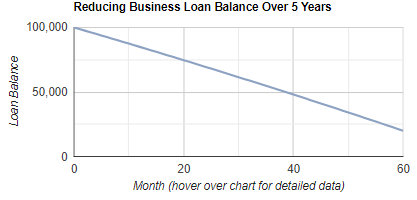
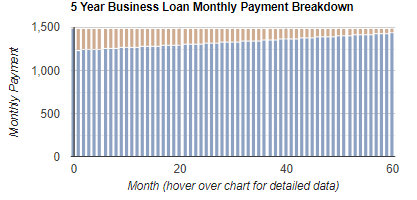
The following amortisation graphs detail month-by-month data on the progress of the proposed loan. The first chart below examines the reducing loan balance over the course of the finance contract term. The second graph illustrates the portion of each monthly repayment allocated to payment of interest vs principal reduction.
How to use our Business Loan Repayment Calculator
Our Business Loan Repayment Calculator helps you estimate business loan repayments, compare finance options and understand the true cost of borrowing before you commit. It is important because small changes to your loan amount, interest rate, term or balloon payment can materially change cash flow, total interest and end-of-term obligations. This calculator provides an indicative estimate only and is designed to support planning and budgeting for business growth.
How to complete each section for the best result:
1. Loan Amount
Enter the amount you expect to borrow as a whole number (no dots or commas). Include any costs you plan to capitalise into the loan, such as stamp duty, registration, insurance or other applicable fees, so the estimate reflects your real financed amount.
2. Balloon or Residual Payment (optional)
Select a residual as a percentage of the purchase price. A higher residual usually reduces ongoing repayments, but increases the amount due at the end and can increase total interest over the term. Choose a residual only if you have a realistic plan to refinance, pay it out, or sell an asset to meet the final amount.
3. Term of Loan
Select the number of years you want to repay the loan. A longer term generally lowers periodic repayments but increases total interest paid. A shorter term can reduce total cost but may place pressure on cash flow.
4. Interest Rate
Select an indicative annual interest rate to run a scenario. Your actual rate depends on lender assessment and your business circumstances, so consider testing multiple rates to stress-test affordability.
How to interpret the results:
1. Repayment estimate
Use the repayment figure as a budgeting guide for regular cash flow planning. If you selected a residual, remember the final payout is additional to the periodic repayments.
2. Amortisation charts
Review the reducing loan balance over time and the split between interest and principal. Early repayments typically include a higher interest component, with principal reduction accelerating later.
General information only, not personal financial advice. It does not consider your objectives, financial situation or needs. Consider the loan contract, fees, repayment frequency, and whether the repayments remain affordable under higher rates or lower revenue, and seek professional advice if required.
Recent rain across eastern and central Australia is delivering a mixed message for farm businesses: welcome support for summer crops and pasture, but fresh uncertainty for winter crop harvest timing, grain quality and short-term cash flow. The latest ABARES weekly update, dated 5 November 2026, reported falls across Queensland and northern New South Wales cropping regions and warned that further rain could delay harvest and lift the risk of quality downgrades from excess moisture. - read more
The Reserve Bank’s 3 November decision to lift the cash rate target by 25 basis points to 4.85 per cent gives Australian farm businesses another reason to revisit borrowing assumptions before summer cash flow decisions are locked in. The move, from 4.60 per cent, was made as the central bank pointed to stubborn inflation, higher fuel and commodity prices, and the risk that inflation expectations become harder to contain. - read more
New biodiversity offset agreements in Central West NSW are putting a fresh financial question in front of some landholders: how should long-term conservation income be weighed against restrictions on future land use? Recent ABC Rural reporting detailed NSW Government agreements covering more than 15,000 hectares to offset land affected by transmission infrastructure in the Central-West Orana Renewable Energy Zone, with the model expected to extend to other renewable energy projects. - read more
Recent rural market reporting suggests Australian cattle values are regaining strength as seasonal conditions improve in several regions and buyer confidence returns to saleyards and direct markets. For livestock producers, that is welcome after a period marked by price pressure, high operating costs and difficult decisions around stocking rates. - read more
Australian farmers may be able to access government grants, concessional loans, disaster assistance and other support, but these differ from standard commercial farm loans in purpose, eligibility, timing and repayment obligations. - read more
Australia's agriculture sector is a critical component of the country's economy, contributing significantly to both GDP and employment. Ensuring growth and sustainability in this sector relies heavily on access to appropriate financial services. Farm loans play a crucial role in providing the necessary finances for farmers to manage their businesses effectively. - read more
Seasonal income can make standard monthly farm loan repayments difficult to manage. This guide explains how Australian farmers can think about repayment timing, interest-only periods, working capital needs, fees and cash flow planning when assessing farm finance options. - read more
First-time farmers can strengthen a farm loan application by preparing a clear business plan, realistic cash flow forecasts, evidence of deposit or equity, suitable security details and documents that explain farming experience, income and risk management. - read more
Knowledgebase
Loan-to-Value Ratio (LTV): A ratio that compares the value of the loan to the market value of the property securing the loan.