Farm Loans & Rural Finance Information For Aussie Farmers
Explore practical farm finance information, tools and resources for Australian primary producers. Whether you are buying rural property, upgrading equipment or smoothing out seasonal cash flow, our educational content helps you understand agricultural loan options. We publish general information, not personalised advice.
Farm loans and rural finance for Australian producers
Farm loans in Australia can be complex, especially with seasonal income and changing conditions. We break down agricultural loans, eligibility and the application process so you can choose structures that suit your farm, from working capital and equipment finance to rural property loans and refinancing.
Whether you run a family farm or a growing agribusiness, you can use this site to explore farm loans Australia wide, understand how lenders assess applications, and learn about the role of farm loan brokers. Browse our articles and calculators, or subscribe to MoneyTips for financial information, news, guides and resources.
Agricultural loan options for your farm
Rural property loans: Purchase or expand farmland and rural property held for productive agricultural use.
Equipment and machinery finance: Fund tractors, harvesters, irrigation systems, sheds and on-farm infrastructure.
Working capital & seasonal loans: Cover seed, feed, fuel, wages and other inputs between harvests.
Farm refinancing: Restructure existing farm loans or consolidate debt to improve cash flow stability.
Understanding farm loan eligibility assessment in Australia can make applying less stressful, even with irregular income.
Lenders typically look at your farm’s past performance, off‑farm income, assets and liabilities, and the strength of your business plan. Clear records showing cash flow trends and existing debts can help demonstrate how you will manage new repayments.
Security may include rural property, livestock, plant and equipment or other assets. Explaining seasonal patterns and any recent challenges helps lenders see the full picture. You can learn more about this information website on the About page.
Government grants and loans for farmers can sometimes work alongside commercial farm loans to support investment.
Concessional farm loans for drought, disaster recovery or restructuring viable farm businesses.
Grants for water efficiency, environmental projects, innovation and diversification.
Programs that support succession planning, skills development and on‑farm technology upgrades.
These programs change over time, so staying informed is important. Visit our articles and news sections for broader farm finance information. Check official government farm business resources and the relevant program administrator for current availability and eligibility requirements.
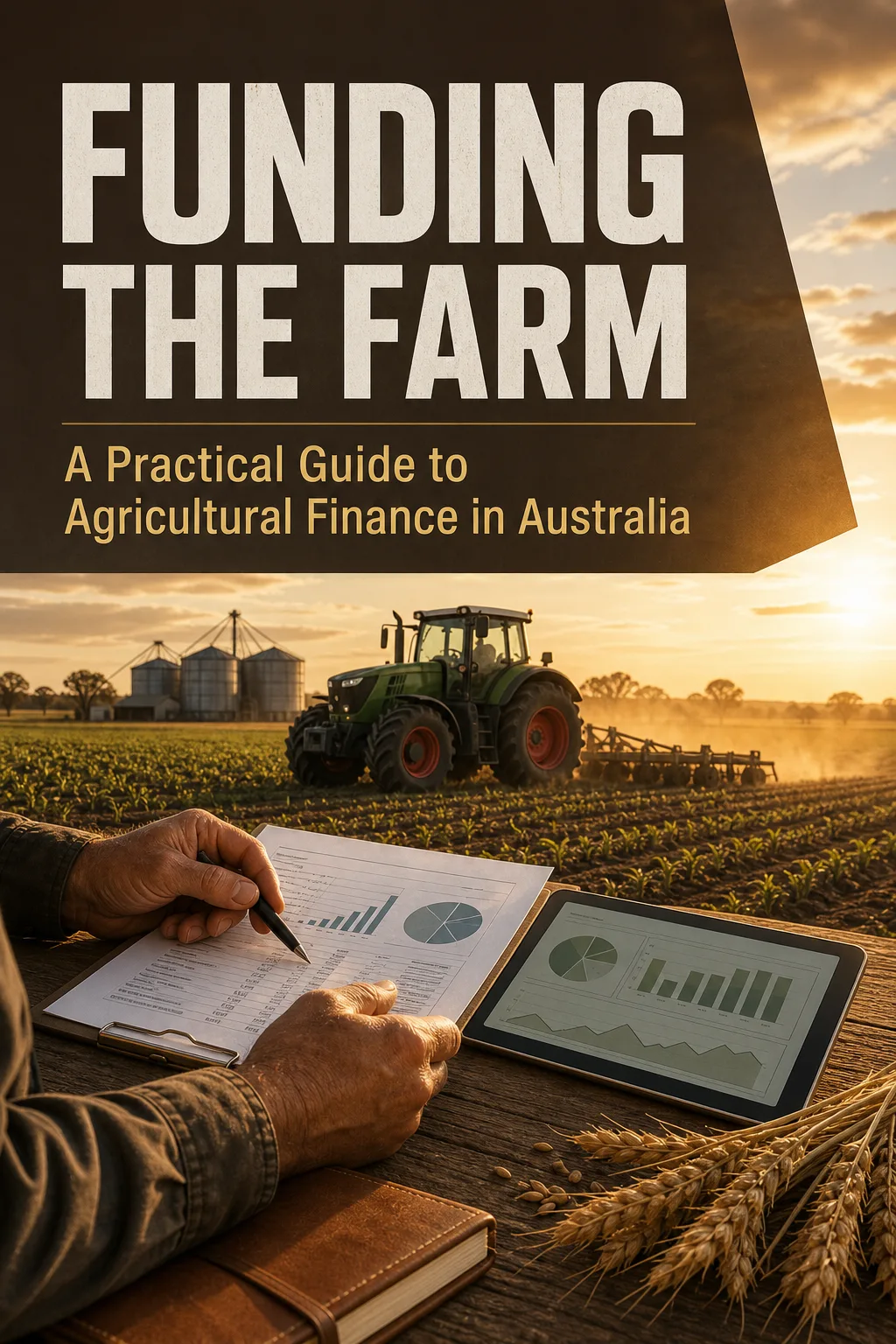
Funding the Farm: A Practical Guide to Agricultural Finance in Australia
Finance can shape the future of a farming operation, from buying land and upgrading machinery to managing seasonal cash flow or refinancing existing debt. This practical guide explains how farm loans, agricultural loans and rural finance work in the Australian context.
Written for farmers, primary producers, rural property buyers and agribusiness owners, it covers lender expectations, business planning, loan structures, rates, fees, equipment finance, working capital and rural property purchases.
With checklists, case studies and FAQs, it helps readers prepare more confidently for finance discussions and compare options with greater clarity.
This week: US tariff risk clouds Australian lamb exports; SA locust outbreaks drive unplanned costs; GrainCorp posts a small FY26 loss and begins a leadership transition as east‑coast receivals lift; ABS data caps a record year for barley exports while sorghum eases. The wrap links each development to cash‑flow planning, seasonal loan structures, and comparing borrowing costs for Australian farmers.
Use our tools and resources to learn how to compare farm loan rates, estimate repayments and understand different loan structures before you commit.
Tools, tips and real farm finance insights
From calculators to practical guides, we aim to give farmers the information needed to ask better questions, negotiate fairer terms and choose rural finance with confidence.
Compare farm loan rates and structures
Different lenders approach farm loans differently, so comparing interest rates and features is important.
See how term length, repayment frequency and security affect farm loan rates.
Understand the impact of fixed versus variable interest on long‑term cash flow.
Explore whether you can refinance your existing farm loan to improve flexibility.
Our calculators help you model scenarios and understand repayments before you speak with a lender or broker. Results are estimates based on assumptions, not quotes, offers, approval, eligibility decisions or recommendations. Try them now on the farm loan calculators page.
Stronger cash flow planning can support your application for agribusiness loans and reduce day‑to‑day pressure.
Match repayment schedules to your income cycles from cropping, livestock or mixed enterprises.
Use forecasts to plan input purchases and avoid short‑term, high‑cost credit.
Review budgets regularly so you can act early if conditions or prices change.
For more practical financial literacy tips tailored to primary producers, explore our latest guides in the farm finance articles section.
Farm Equipment Finance Calculator
Explore potential farm equipment finance scenarios with our Farm Equipment Finance Calculator. Test different deposit amounts, trade-in values, residual (balloon) payments and loan terms to estimate repayments and see how varying assumptions may affect your farms cash flow.
Recent rain across eastern and central Australia is delivering a mixed message for farm businesses: welcome support for summer crops and pasture, but fresh uncertainty for winter crop harvest timing, grain quality and short-term cash flow. The latest ABARES weekly update, dated 5 November 2026, reported falls across Queensland and northern New South Wales cropping regions and warned that further rain could delay harvest and lift the risk of quality downgrades from excess moisture. - read more
The Reserve Bank’s 3 November decision to lift the cash rate target by 25 basis points to 4.85 per cent gives Australian farm businesses another reason to revisit borrowing assumptions before summer cash flow decisions are locked in. The move, from 4.60 per cent, was made as the central bank pointed to stubborn inflation, higher fuel and commodity prices, and the risk that inflation expectations become harder to contain. - read more
New biodiversity offset agreements in Central West NSW are putting a fresh financial question in front of some landholders: how should long-term conservation income be weighed against restrictions on future land use? Recent ABC Rural reporting detailed NSW Government agreements covering more than 15,000 hectares to offset land affected by transmission infrastructure in the Central-West Orana Renewable Energy Zone, with the model expected to extend to other renewable energy projects. - read more
Recent rural market reporting suggests Australian cattle values are regaining strength as seasonal conditions improve in several regions and buyer confidence returns to saleyards and direct markets. For livestock producers, that is welcome after a period marked by price pressure, high operating costs and difficult decisions around stocking rates. - read more
Farm loan refinancing is the process of replacing an existing farm loan with a new one, typically to obtain more favorable terms. This might include a lower interest rate, modified repayment schedule, or reduced monthly payments. It's a financial strategy that Australian farmers and agribusiness owners can use to improve their financial standing and adapt to changing business needs. - read more
Australia's agriculture sector is a critical component of the country's economy, contributing significantly to both GDP and employment. Ensuring growth and sustainability in this sector relies heavily on access to appropriate financial services. Farm loans play a crucial role in providing the necessary finances for farmers to manage their businesses effectively. - read more
Seasonal income can make standard monthly farm loan repayments difficult to manage. This guide explains how Australian farmers can think about repayment timing, interest-only periods, working capital needs, fees and cash flow planning when assessing farm finance options. - read more
First-time farmers can strengthen a farm loan application by preparing a clear business plan, realistic cash flow forecasts, evidence of deposit or equity, suitable security details and documents that explain farming experience, income and risk management. - read more
Knowledgebase
Portfolio: A range of investments held by an individual or institution.